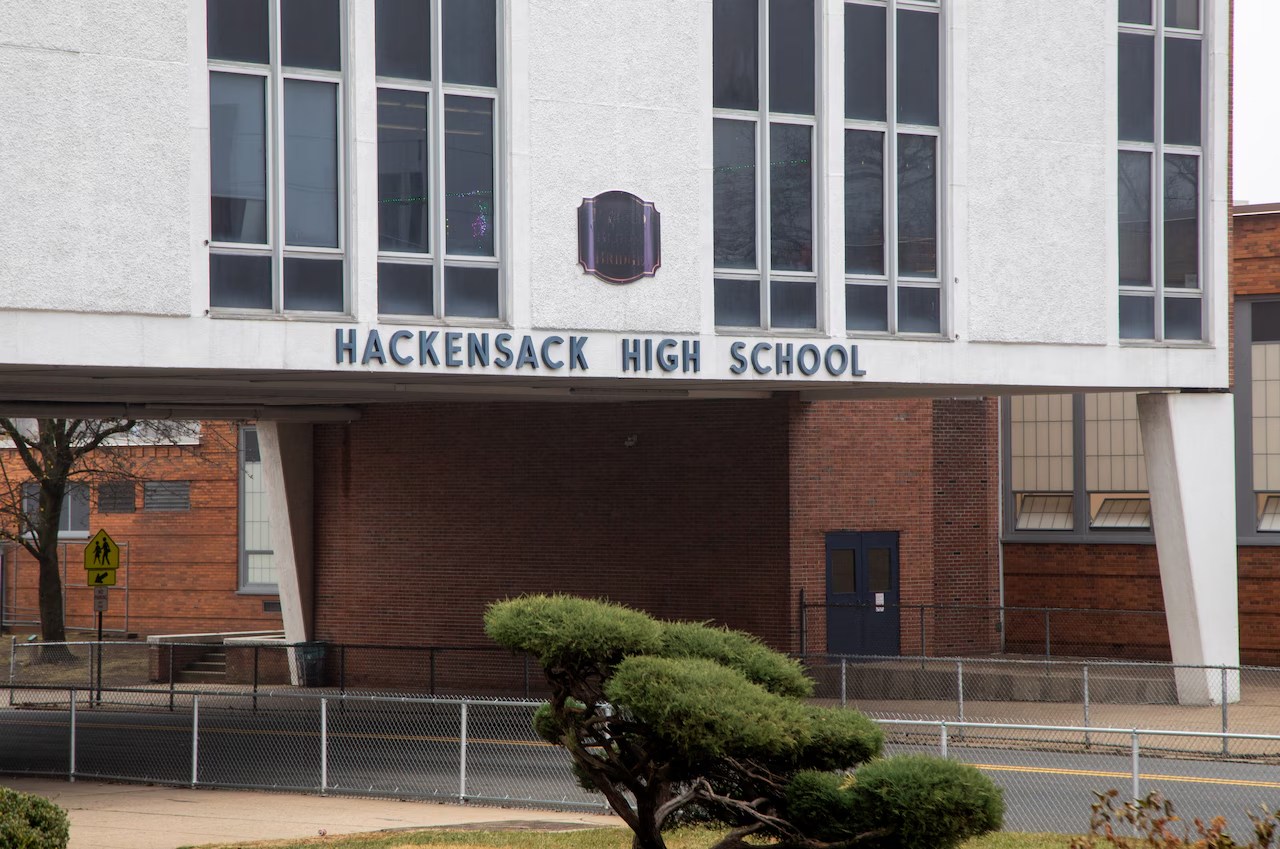
On January 28, the Hackensack Mayor and Council approved a $6.5 million emergency transfer to the Hackensack Board of Education, ensuring educational continuity for the remainder of the 2025–2026 school year in the wake of a recently-discovered $17 million shortfall to the Hackensack Public Schools budget.
The vote received applause from a packed Council Chambers, where parents, students, educators, PTA members, clergy, and community members expressed strong support for maintaining classroom stability.
Mayor Caseen Gaines recused himself from both the otherwise-unanimous vote and the meeting’s closed session discussion.
During public comment, Rev. Drew Ross of New Hope Baptist Church praised the Mayor and Council for supporting the public schools during this challenging time. “In my ten years in Hackensack, this is one of the first times I’ve seen the Council working so closely with the Board of Education, demonstrating that Hackensack is united,” Ross said.
This one-time action addresses serious financial concerns stemming from what was revealed to be previous school leadership and governance failures that contributed to the current crisis.
The Board of Education’s recent independent audit highlighted unchecked spending and oversight breakdowns, including the “rubber-stamping” of over forty unbudgeted hires between 2019 and 2024.
Additionally, the severance of the half-century long Maywood sending-receiving relationship in 2019, which was welcomed by previous City Council and Board of Education administrations, resulted in nearly $15 million in lost tuition to date.
The City Council also noted how their predecessor’s granting of long-term tax exemptions (PILOTs) for luxury housing developments increased student enrollment without contributing revenue to the schools during the same period.
City Attorney Richard Malagiere explained the structure and oversight behind the emergency action. He clarified how the City’s transfer allows the Board of Education to access existing reserve funds for their intended school purposes.
“The school board has approximately $10.5 million in reserves, but it cannot access those reserves for this shortfall of $17 million unless it can demonstrate to the State that it has filled the entire gap for the year,” Malagiere noted. “The only way to achieve this is through the City’s infusion of the $6.5 million.”
Deputy Mayor Agatha Toomey emphasized the seriousness of the decision and the careful consideration that led to this swift action.
“This was one of the most difficult decisions I have faced,” she said. “Every option carried consequences, and none were perfect, but doing nothing was not an option. At the core of this decision was our responsibility to the people we serve—our students, our teachers, and our entire community.”
In closing remarks, Mayor Gaines emphasized that the City’s response reflects a commitment to act when Hackensack families need help while also demanding accountability for how this crisis developed.
“I am incredibly proud of the action taken by this Council. This is what we promised to do,” he said. “This financial crisis did not occur magically; it happened because of people’s actions and inactions. As a taxpayer myself, I believe there is a price to be paid in accountability. I also share the Council’s belief that the children of Hackensack should not pay the price for what adults did or did not do to support the schools during this period.”
Later that evening, during a Special Board of Education Meeting to accept the emergency funds, Board President Jennifer Harris thanked the City and emphasized that the Board will not take the support for granted. Harris expressed gratitude to the Mayor and Council for moving “as quickly as possible,” and underscored that the City’s help protects educational continuity for Hackensack’s children, who she described as both the Board of Education’s responsibility and the community’s shared priority.
However, this transfer is a lifeline, not a finish line. The crisis is not over. This emergency transfer is a critical first step that stabilizes the remainder of the 2025–2026 school year. The Board of Education needs to implement substantial cost controls and oversight reforms necessary for long-term solvency and accountability.